---
title: Existing Records Don't Always Tell the Whole Story
description: Existing records are only part of the story. Learn how verifying conditions early helps reduce uncertainty, preserve options, and control costs.
image: https://blog.allnorth.com/hubfs/Existing%20Records%20Dont%20Always%20Tell%20the%20Whole%20Story%20(1).png
---
[](https://www.allnorth.com/)
- [Sectors](https://www.allnorth.com/sectors/)
- [Infrastructure](https://www.allnorth.com/sectors/infrastructure/)
- [Metals & Minerals](https://www.allnorth.com/sectors/metals-and-minerals/)
- [Energy & Renewables](https://www.allnorth.com/sectors/energy-and-renewables/)
- [Fiber & Chemicals](https://www.allnorth.com/sectors/fiber-and-chemicals/)
- [Services](https://www.allnorth.com/services/)
- [Engineering Services](https://www.allnorth.com/services/engineering-services/)
- [Construction Services](https://www.allnorth.com/services/construction-services/)
- [Project Delivery Services](https://www.allnorth.com/services/project-delivery-services/)
- [Digital Solutions](https://www.allnorth.com/services/digital-solutions/)
- [Projects](https://www.allnorth.com/projects/)
- [Locations](https://www.allnorth.com/locations/)
- [Billing Address - all locations](https://www.allnorth.com/locations/billing-address/)
- [Atlanta](https://www.allnorth.com/locations/atlanta/)
- [Calgary NW](https://www.allnorth.com/locations/calgary/)
- [Calgary SE](https://www.allnorth.com/locations/calgary-se/)
- [Chetwynd](https://www.allnorth.com/locations/chetwynd/)
- [Clarenville](https://www.allnorth.com/locations/clarenville/)
- [Corner Brook](https://www.allnorth.com/locations/corner-brook/)
- [Fort St. John](https://www.allnorth.com/locations/fort-st-john/)
- [Gander](https://www.allnorth.com/locations/gander/)
- [Grande Prairie](https://www.allnorth.com/locations/grande-prairie/)
- [Kamloops](https://www.allnorth.com/locations/kamloops/)
- [Kelowna](https://www.allnorth.com/locations/kelowna/)
- [Kitimat](https://www.allnorth.com/locations/kitimat/)
- [Nanaimo](https://www.allnorth.com/locations/nanaimo/)
- [Prince George](https://www.allnorth.com/locations/prince-george/)
- [Regina](https://www.allnorth.com/locations/regina/)
- [Saskatoon](https://www.allnorth.com/locations/saskatoon/)
- [Sherwood Park (Edmonton area)](https://www.allnorth.com/locations/sherwood-park-edmonton/)
- [St. John's & area](https://www.allnorth.com/locations/st-johns/)
- [Terrace](https://www.allnorth.com/locations/terrace/)
- [Vancouver](https://www.allnorth.com/locations/vancouver/)
- [Victoria](https://www.allnorth.com/locations/victoria/)
- [About](https://www.allnorth.com/about/)
- [About Us](https://www.allnorth.com/about/)
- [Our Leadership Team](https://www.allnorth.com/leadership-team/)
- [Board of Directors](https://www.allnorth.com/board-of-directors/)
- [Safety](https://www.allnorth.com/about/safety/)
- [Indigenous Partnerships](https://www.allnorth.com/about/indigenous-partnerships/)
- [Community](https://www.allnorth.com/about/community/)
- [Resources](https://www.allnorth.com/resources/)
- [Careers](https://www.allnorth.com/careers/)
- [Job Listings](https://chm.tbe.taleo.net/chm01/ats/careers/v2/jobSearch?act=redirectCwsV2&cws=40&org=ALLNORTH)
- [Blog](https://blog.allnorth.com)
[Contact Us](https://www.allnorth.com/contact/)
-
-
-
-
- [Home](https://www.allnorth.com/)
- [Sectors](https://www.allnorth.com/sectors/)
- [Fiber & Chemicals](https://www.allnorth.com/sectors/fiber-and-chemicals/)
- [Infrastructure](https://www.allnorth.com/sectors/infrastructure/)
- [Energy & Renewables](https://www.allnorth.com/sectors/energy-and-renewables/)
- [Metals & Minerals](https://www.allnorth.com/sectors/metals-and-minerals/)
- [Services](https://www.allnorth.com/services/)
- [Projects](https://www.allnorth.com/projects/)
- [Locations](https://www.allnorth.com/locations/)
- [About](https://www.allnorth.com/about/)
- [Leadership Team](https://www.allnorth.com/leadership-team/)
- [Board Members](https://www.allnorth.com/board-of-directors/)
- [Safety](https://www.allnorth.com/about/safety/)
- [Indigenous Partnerships](https://www.allnorth.com/about/indigenous-partnerships/)
- [Community](https://www.allnorth.com/about/community/)
- [Resources](https://www.allnorth.com/resources/)
- [Careers](https://www.allnorth.com/careers/)
- [Job Listings](https://chm.tbe.taleo.net/chm01/ats/careers/v2/jobSearch?act=redirectCwsV2&cws=40&org=ALLNORTH)
- [Blog](https://blog.allnorth.com)
- [Contact](https://www.allnorth.com/contact/)
-
-
-
-
.png)
# Existing Records Don't Always Tell the Whole Story
Posted on 26.08.2026
Posted by [Andrew Johnson](https://blog.allnorth.com/author/andrew-johnson)
- [Tweet](https://twitter.com/share)
#### *Why existing conditions influence infrastructure planning, project risk, and decision-making*
*By Andrew Johnson, Group Lead, Civil Engineering*
Infrastructure projects often require important decisions to be made before teams fully understand existing conditions.
Drawings, utility records, site investigations, and historical documentation provide a valuable starting point, but they don't always capture every modification, operational reality, or field condition that may affect a project. Infrastructure systems are often built, repaired, expanded, and modified over decades, making it difficult for any single source of information to provide a complete picture.
As a result, conditions encountered in the field don't always align with what existing documentation suggests. That's not unusual. It's one of the realities of working with infrastructure that has evolved over time. Understanding that reality is an important part of making informed infrastructure decisions.
#### The Cost of Discovering Something Too Late
Most infrastructure challenges aren't difficult because they exist. They're difficult because they're discovered when there are fewer options available and less time to address them.
A capacity limitation identified during planning can often be evaluated alongside multiple alternatives. The same issue identified later may affect budgets, schedules, approvals, procurement strategies, or construction activities that are already underway. The challenge itself hasn't changed. The flexibility to respond to it has.
Whether the issue involves underground utilities, existing infrastructure, site constraints, or system capacity, identifying it early typically creates more opportunities to evaluate alternatives before project schedules, budgets, or construction plans become constrained.
That's one reason understanding existing conditions is so important. The value of additional information isn't always that it eliminates risk. Often, it's that it preserves options. The earlier teams understand potential constraints, the more flexibility they have when evaluating solutions and making decisions. When issues are discovered later in a project, many potential solutions may no longer be practical because schedules, budgets, approvals, procurement strategies, or construction plans are already in place. Addressing those issues can require redesign, rework, or changes to work that has already been completed, which can increase project costs and affect delivery timelines. Understanding existing conditions early helps teams make informed decisions while there is still time and flexibility to evaluate alternatives.
#### Understanding What's Really There
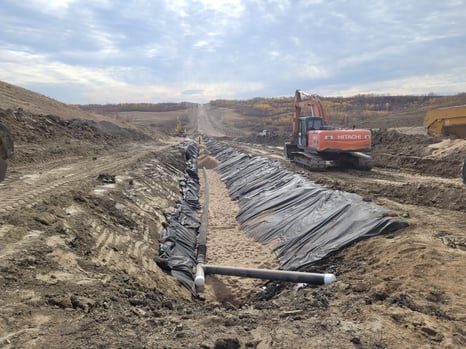Understanding existing conditions isn't always as simple as reviewing available records.
Depending on the project, it may require site visits, utility locates, field investigations, condition assessments, surveying, geotechnical testing, capacity analysis, or conversations with the people responsible for operating and maintaining the infrastructure.
Each source of information contributes part of the picture. The objective is developing a thorough enough understanding of existing conditions that major decisions can be made with confidence.
The effort invested in understanding what's already there often pays dividends later. The more accurately teams can identify constraints, confirm assumptions, and understand how infrastructure systems actually function, the better positioned they are to evaluate options and reduce the likelihood of unexpected issues later in the project.
#### Asking Better Questions
Understanding existing conditions starts with asking the right questions.
What information are we relying on? What conditions still need to be confirmed? What infrastructure assets may require further investigation? Where are the areas of greatest uncertainty?
Questions like these help teams identify potential blind spots before they become project issues. They also create opportunities to gather additional information while flexibility still exists. Asking the right questions early helps teams understand what still needs to be confirmed before major decisions are made, and in many cases, that is what preserves flexibility later in a project.
-1898-1.jpg?width=847&height=843&name=allnorth%20(Squamish)-1898-1.jpg)
#### Why Experience Matters
Two infrastructure projects can appear very similar on paper and present very different realities once work begins. That's one reason experience remains such an important part of infrastructure delivery.
Experience helps teams recognize where information gaps are most likely to exist, what questions deserve closer attention, and which conditions may influence delivery later in the project lifecycle. It doesn't eliminate uncertainty. It helps teams understand where uncertainty may exist and how it could influence future decisions.
That's often the difference between reacting to information and planning for it. The longer someone spends working around infrastructure systems, the more they recognize that understanding what hasn't been confirmed can be just as important as understanding what has.
#### How Allnorth Approaches Infrastructure Projects
At Allnorth, we spend a significant amount of time understanding existing conditions before major infrastructure planning, design, and construction decisions are made. That includes reviewing available information, identifying potential constraints, and helping clients determine where additional investigation may provide value.
It isn't always the most visible part of a project, but it often has a significant influence on the decisions that follow. Strong infrastructure projects are built on informed decisions, and informed decisions depend on understanding both what is known and what still needs to be confirmed.
#### Better Decisions Start with Better Understanding
Some of the most significant infrastructure decisions are made long before fieldwork begins.
The earlier teams identify constraints, validate assumptions, and develop a clear understanding of existing conditions, the more flexibility they typically have when evaluating options, managing risk, and responding to challenges.
Infrastructure projects will always contain unknowns. The goal isn't to eliminate them. It's to understand which ones matter most before major decisions are made. Strong infrastructure projects aren't defined by what teams know on day one. They're defined by how effectively they reduce uncertainty before it becomes a project issue.
Learn more about how Allnorth supports infrastructure projects from planning through delivery:
[Explore Allnorth Infrastructure Services](https://www.allnorth.com/sectors/infrastructure/).
**About the Author**
Andrew Johnson is Group Lead for Civil Engineering in Allnorth’s Kelowna office, bringing more than 20 years of industry experience and approximately 15 years in project management. He specializes in municipal and industrial infrastructure projects, leading multidisciplinary teams to deliver complex water, wastewater, transportation, and civil infrastructure solutions while balancing client priorities, budgets, and timelines.
#### Recent Posts
[Built Over Decades, Not Just Projects](https://blog.allnorth.com/built-over-decades-not-projects-indigenous-partnerships)
[Allnorth Consultants Limited Appoints Victor Louie as Chief Financial Officer](https://blog.allnorth.com/allnorth-consultants-limited-appoints-victor-louie-as-chief-financial-officer)
[What It Means to Be #OneTeam at Allnorth](https://blog.allnorth.com/what-it-means-to-be-oneteam-at-allnorth)
[Allnorth Consultants Limited Appoints Greg Northcott as Chief Executive Officer](https://blog.allnorth.com/allnorth-appoints-greg-northcott-chief-executive-officer-2026)
[Closing the Loop: Water and Energy Performance in Pulp and Paper](https://blog.allnorth.com/water-energy-performance-pulp-paper)
[Building Construction Strength Through Experience and Execution](https://blog.allnorth.com/thomas-netzel-vp-business-development-construction-services)
#### Tags
[Infrastructure](https://blog.allnorth.com/tag/infrastructure)
[Construction Services](https://blog.allnorth.com/tag/construction-services)
## Find an office near you
With locations across Canada and in the US, Allnorth prides itself on being responsive to client needs and to providing leading-edge methodologies, technologies and protocols. Having a local presence helps us build strong relationships, and working cross functionally throughout the company helps us leverage the strengths of our entire team to deliver successful client solutions. Contact us today for more information as to how we can work together for you.
[Learn More](https://www.allnorth.com/locations/)

- About Us
- [CEO's Message](https://www.allnorth.com/about)
- [Leadership](https://www.allnorth.com/leadership-team)
- [Allnorth Companies](https://www.allnorth.com/about/allnorth-companies/)
- [Indigenous Partnerships](https://www.allnorth.com/about/indigenous-partnerships/)
- Our Work
- [Sectors](https://www.allnorth.com/sectors)
- [Services](https://www.allnorth.com/services)
- [Our Projects](https://www.allnorth.com/projects)
- Join Us
- [Why Allnorth](https://www.allnorth.com/careers)
- [Job Listings](https://chm.tbe.taleo.net/chm01/ats/careers/v2/jobSearch?act=redirectCwsV2&cws=40&org=ALLNORTH)
- [Locations](https://www.allnorth.com/locations)
- Media
- [News](https://www.allnorth.com/news/)
- [Contact Us](https://www.allnorth.com/contact/)
- [Privacy Notice](https://www.allnorth.com/privacy-notice/)
© Copyright 2021 - Allnorth